Institutional Adoption
Share
Following a prolonged bear market in 2023, characterized by banking crises, regulatory crackdowns, and macroeconomic instability, the crypto market has rebounded strongly towards the end of 2024. Sygnum's survey highlights a renewed wave of optimism among traditional financial institutions, driven by significant inflows into the market, the emergence of Bitcoin spot ETFs, and the rise of AI and Decentralised Physical Infrastructure Networks (DePIN).
The survey, released on Thursday, showed that institutions are poised to increase their investments in digital assets, with 57% planning to expand their cryptocurrency exposure, driven by a rising appetite for risk and long-term confidence in the asset class.
Adding to this optimistic outlook, the Crypto Fear & Greed Index recently reached a level of 84, placing it firmly in the “Extreme Greed” zone. This index, maintained by Alternative, reflects a surge in bullish sentiment and heightened demand for digital assets like Bitcoin. The climb to an 84 rating—up four points within 24 hours—underscores growing investor enthusiasm, indicating increased market participation. However, this spike also serves as a cautionary signal, as Extreme Greed can precede potential volatility or market corrections due to overenthusiasm.
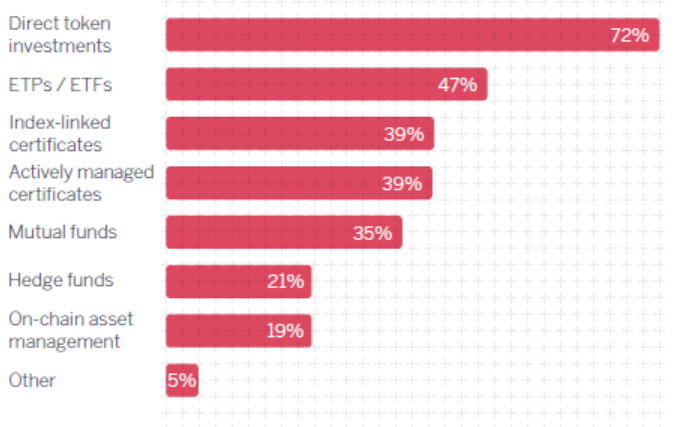
Sygnum's survey, which includes responses from single-family offices, hedge funds, trading firms, and private equity players, reveals that 72% of respondents are open to investing in crypto assets. Notably, traditional entities like external asset managers and fund managers are showing a higher level of openness compared to banks and insurance companies, which exhibit mixed sentiments.
Lucas Schweiger, Sygnum’s Digital Asset Research Manager, emphasized the increasing interest from traditional investors: “This report tells the story of progress and calculated risk, the use of a diverse set of strategies to leverage opportunities and most of all, the continued belief in the market’s long-term potential to reshape traditional financial markets."
The findings show a growing appetite for risk among traditional investors, with the majority of investors not currently investing in crypto assets plan to enter the market in the next 12 months. 57% plan to increase their crypto allocations, with 31% planning to do so in the next quarter, and 32% in the next six months. The desire to diversify traditional portfolios and hedge against macroeconomic uncertainty are key drivers behind this trend.
This growing appetite aligns with the surge in the Crypto Fear & Greed Index, as heightened enthusiasm among investors often translates into increased market activity. However, while high levels of optimism are encouraging, the Extreme Greed reading also suggests the potential for speculative behavior, where FOMO (fear of missing out) can drive impulsive investments, possibly leading to market volatility.
Key insights include:
A striking 91% of respondents prefer investing in well-established assets such as Bitcoin, Ethereum, and Layer 1 competitors like Solana and BNB Chain, given their perceived stability and support from traditional financial institutions.

Disclaimer of Warranty
The information provided in this article is for general informational purposes only. We make no warranties about the completeness, reliability, and accuracy of this information. Read full disclaimer
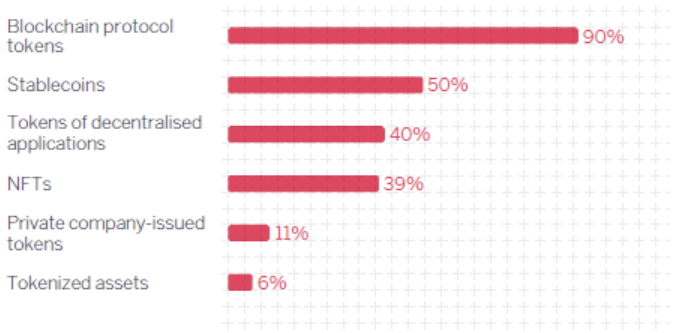
Additionally, 50% of respondents hold stablecoins, using them as a hedge against market volatility and as reliable entry and exit points for crypto investments. The surge in the Crypto Fear & Greed Index underscores this dual approach, where investors seek the balance of riskier, high-reward assets alongside stablecoins for liquidity and stability.
Traditional investors looking to invest in digital assets were previously challenged by their strict fiduciary responsibilities and investment mandates, as well as limited access to properly regulated crypto asset custodians. However as regulatory clarity is perceived to be on the rise (69%), asset volatility (43%) has become the biggest barrier to institutional crypto adoption.
The approval of US spot Bitcoin ETFs has significantly boosted confidence, with 71% of respondents agreeing that these products have made crypto investing more attractive. As of now, spot Bitcoin ETFs hold $82.3 billion in Assets under Management (AuM), indicating robust institutional interest.
Bitcoin’s performance has further solidified its market dominance, with the cryptocurrency recently overtaking Saudi Aramco to become the seventh-largest asset by market capitalization. Bitcoin’s dominance reached a high of 61.38%, and its price hit a record of over $93,000. A significant portion of this success can be attributed to the massive inflows into U.S.-listed Bitcoin spot ETFs. In the past six trading days alone, Bitcoin ETFs have seen net inflows of $4.7 billion, including $510.1 million on Wednesday alone. This brings the total net inflows since their introduction in January to $28.2 billion, according to Farside data.
These developments highlight the increasing institutional interest in Bitcoin, driven largely by the growing availability and success of Bitcoin ETFs. This surge in demand underscores the ongoing bullish sentiment surrounding the cryptocurrency and its expanding role in institutional portfolios.
ETPs/ETFs rank as the second most popular investment product in Sygnum's Survey, at 47%, driven largely by their familiarity to traditional investors and the successful launch of several spot crypto ETF products by leading traditional financial issuers. This aligns with the high interest in passive market exposure, attracting interest from both institutional and high-net-worth individuals (HNWIs).
While sentiment remains cautious in the short term due to geopolitical tensions and macroeconomic uncertainties, the outlook turns bullish over the next 12 months. 56% of investors expect to increase their allocations in 2025, anticipating improved market conditions driven by factors like the US rate cut cycle and China's aggressive stimulus packages.
Sygnum's survey highlights a shift in traditional investors’ attitudes towards the crypto market, showcasing growing confidence and strategic interest in digital assets. As regulatory clarity improves and more institutional-grade products like ETFs become available, the market is poised for further growth, driven by new capital inflows and diversified investment strategies.
Sygnum's survey reveals a slightly higher preference for blockchain over crypto assets, with 83% of respondents acknowledging blockchain’s pivotal role in the future of finance, compared to 76 percent for crypto assets.
Similar to 2023, traditional investors tend to place greater value on blockchain's technological capabilities and cost-saving advantages over the crypto assets themselves. This is likely because traditional institutions are focused on transitioning capital markets onto the blockchain and are actively working to unlock its potential through their own tokenization platforms and investment products.





Editor's Picks

UAE Stablecoins: Why They Are Built to Travel, Not Stay Local

Walid Abou Zaki

Feb 28, 2026

8 min

The Central Bank of the UAE Clearing the Noise Around Article 62
Walid Abou Zaki
Feb 25, 2026
5 min

Europe’s Crypto Purge: Did Lithuania Just Kick Out Innovation — and is the UAE the Beneficiary?
Salma Naueihed
Feb 18, 2026
7 min
Read More Articles

In the Same Space

Kazakhstan Plans $350M Digital Asset Investment
News Desk
Mar 6, 2026
3 min

Western Union Unveils Solana-Based Stablecoin as Part of Global Digital Asset Strategy
News Desk
Mar 5, 2026
3 min

Trump on Stablecoin Yield Dispute: “Americans Should Earn More Money on Their Money” as Clarity Act Stalls
News Desk
Mar 4, 2026
3 min
From Dubai to the Fed: Kraken Financial Becomes First Crypto Bank with Federal Reserve Account
Salma Naueihed
Mar 4, 2026
2 min