Regulation & Policy
Share
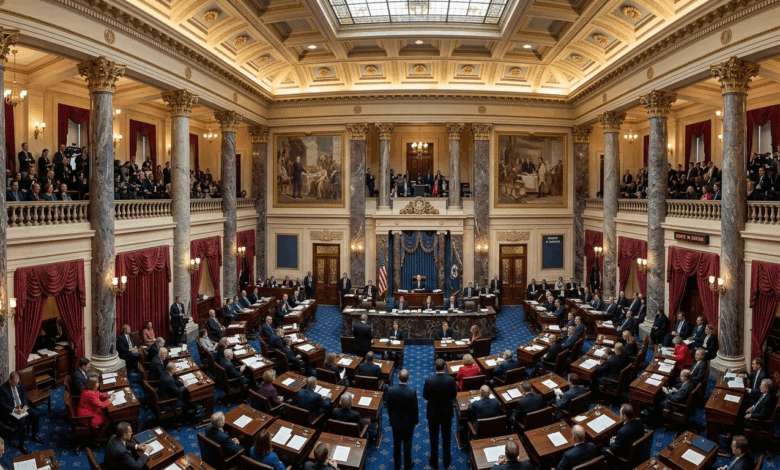
A major bipartisan housing bill in the United States Senate includes a provision that would block the Federal Reserve from creating a central bank digital currency until the start of the next decade.
The language appears in the new 21st Century ROAD to Housing Act, announced Monday by Senate Banking Committee Chair Tim Scott and Ranking Member Elizabeth Warren.
The bill focuses on removing construction barriers, reducing regulatory costs, and expanding housing supply across the country. Lawmakers framed the package as a practical step to address affordability concerns and strengthen access to homeownership.
Scott said the initiative reflects his own experience growing up in North Charleston and seeks to give working families more economic mobility and a clearer path toward buying a home. Warren described the legislation as a broad, bipartisan effort that incorporates ideas from both chambers and places new limits on large corporate landlords that have been purchasing homes at scale.
Legislation

Disclaimer of Warranty
The information provided in this article is for general informational purposes only. We make no warranties about the completeness, reliability, and accuracy of this information. Read full disclaimer
Neither senator highlighted the CBDC provision, which occupies only a small portion of the three hundred page bill. The measure would prohibit the Federal Reserve or any Federal Reserve Bank from creating or issuing a central bank digital currency, whether directly or through financial intermediaries. The restriction would remain in place until the end of December 2030.
The text includes an exception for privately issued, dollar denominated digital currencies that operate without central permission and maintain privacy standards equivalent to physical cash. Similar CBDC prohibitions have appeared in earlier legislative drafts, and the House of Representatives approved a standalone version last year, although it stalled before reaching the Senate.
The Biden administration endorsed the housing bill in a brief policy statement released Monday. The White House specifically pointed to the CBDC provision as a positive element, noting that a government backed digital dollar could pose risks to civil liberties and personal privacy.
The Senate Banking Committee is expected to advance the bill in the coming weeks as lawmakers confront rising housing costs and debate the future of U.S. digital currency policy.




Editor's Picks

UAE Stablecoins: Why They Are Built to Travel, Not Stay Local

Walid Abou Zaki

Feb 28, 2026

8 min

The Central Bank of the UAE Clearing the Noise Around Article 62
Walid Abou Zaki
Feb 25, 2026
5 min

Europe’s Crypto Purge: Did Lithuania Just Kick Out Innovation — and is the UAE the Beneficiary?
Salma Naueihed
Feb 18, 2026
7 min
Read More Articles

In the Same Space

CFTC Signals Imminent Launch of U.S. Crypto-Linked Perpetual Futures
Salma Naueihed
Mar 4, 2026
3 min

Binance, Iran, and the Question of Narrative at a Critical Moment
News Desk
Feb 26, 2026
5 min
OCC Seeks Feedback on GENIUS Act Stablecoin Proposal
News Desk
Feb 26, 2026
2 min

European Central Bank Paper Flags Stablecoin Risks to Euro-Area Banks and Monetary Sovereignty
News Desk
Mar 4, 2026
3 min