Stablecoins & Payments
Share

SN
Senior English Editor


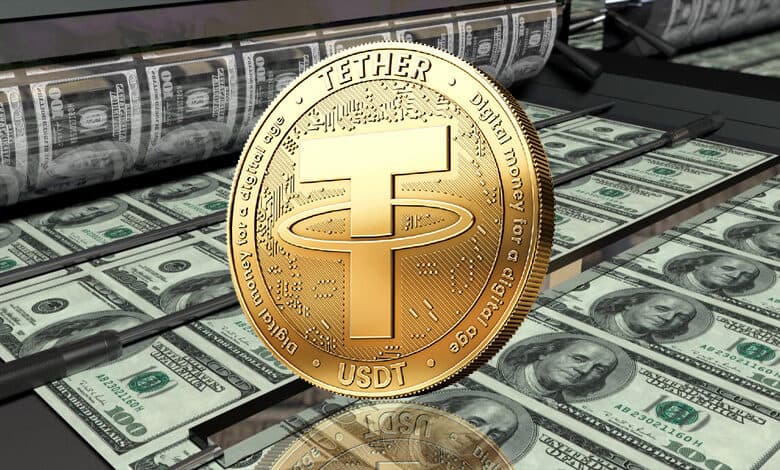
JPMorgan projected that stablecoins could generate $1.4 trillion in additional demand for U.S. dollars by 2027, according to a Reuters report. With the market already worth over $260 billion, stablecoins are fast becoming a key bridge between digital assets and traditional finance.
Since nearly all stablecoins are pegged to the U.S. dollar, their growth extends America’s monetary influence into digital markets, creating new flows of dollar demand worldwide.
However, this raises the question: does rising stablecoin demand equate to the U.S. “printing more money,” or is it something more strategic? Some observers argue that the pressure from rising demand could lead to more dollar or Treasury issuance to satisfy that demand.
Stablecoin issuers are required to hold reserves, typically in cash, short-term U.S. Treasuries, or dollar-equivalent instruments. The process doesn’t resemble central bank money printing, but the outcome is worth noting: each new stablecoin minted represents a claim on dollar assets, making issuers consistent buyers of U.S. government debt.
As one market veteran observed, “Demand on dollars means creating new ones. If issuers of stablecoins have to back tokens with T-bills and equivalents, it means only one thing: more dominance, but not more value.” The statement captures the paradox well. Stablecoins don’t magically enhance the dollar’s purchasing power, but they do hardwire demand for dollar assets, reinforcing U.S. dominance in global markets and encouraging further issuance of Treasuries to accommodate this demand.
This dynamic also intersects with broader concerns about U.S. debt. Some observers have speculated that stablecoins could help absorb Treasury issuance, indirectly easing debt financing pressures while expanding the digital dollar footprint. However, claims that stablecoins are a tool to “erase” the U.S.’s $37 trillion debt are misleading. Even if all stablecoin reserves were held in Treasuries, they would represent less than 4% of the debt. Stablecoins help the U.S. manage debt, not erase it.

Disclaimer of Warranty
The information provided in this article is for general informational purposes only. We make no warranties about the completeness, reliability, and accuracy of this information. Read full disclaimer
The growth of stablecoins can also be seen as part of a broader geopolitical contest. Washington’s embrace of stablecoins is more than just financial innovation; it is the creation of a new digital highway for exporting American monetary power. By backing them with Treasuries and building regulatory frameworks around their issuance, the U.S. is actively rewiring the post-World War II monetary order.
This development is particularly concerning for China, which has long promoted the digital yuan as a counterweight to the dollar. Stablecoins, however, give the U.S. a fresh advantage by embedding dollar-denominated assets deep into the plumbing of digital finance. Instead of weakening the dollar, they make it harder for rivals to dislodge its role in trade and settlement — a shift described as a nightmare scenario for China, in a Bloomberg report. Hence, the growth of stablecoins is not only an economic story — it is a geopolitical strategy, one that strengthens the U.S. grip over global liquidity while leaving competitors scrambling to keep pace.
Stablecoins don’t directly create more “value” in the dollar — they amplify its reach and dominance. In practice, this means:
The dollar’s purchasing power doesn’t grow — but its geopolitical influence does.d
Today, stablecoins are used primarily in trading, arbitrage, and settlement among exchanges and institutional actors, not in mass payments. Usage for remittances and real-world commerce remains in the low single-digit percentages.
But that is destined to change. As fintechs, merchants, and even governments begin to integrate stablecoins, they could evolve from niche trading tools into mainstream payment instruments. This shift would mark the next phase of digital dollar dominance — moving from exchanges to everyday commerce.
While stablecoins amplify demand for dollars and Treasuries, forcing the U.S. to supply more assets to meet global liquidity needs, they also serve a strategic purpose: extending U.S. monetary influence in regions where traditional systems don’t reach. While some claim stablecoins are a method to “erase” the U.S. debt, the reality is different: they support debt management, not elimination. Their growth strengthens U.S. power and projects the dollar globally, a move that rattles nations like China as much as it reinforces U.S. financial dominance.




Editor's Picks
UAE Stablecoins: Why They Are Built to Travel, Not Stay Local

Walid Abou Zaki

Feb 28, 2026

8 min

The Central Bank of the UAE Clearing the Noise Around Article 62
Walid Abou Zaki
Feb 25, 2026
5 min

Europe’s Crypto Purge: Did Lithuania Just Kick Out Innovation — and is the UAE the Beneficiary?
Salma Naueihed
Feb 18, 2026
7 min
Read More Articles

In the Same Space

Dubai Taxi Eyes Crypto Gateway Amid UAE Stablecoin Push
News Desk
Feb 26, 2026
2 min
OCC Seeks Feedback on GENIUS Act Stablecoin Proposal
News Desk
Feb 26, 2026
2 min

Revolut Begins UK Pound Stablecoin Testing in FCA Sandbox
News Desk
Feb 26, 2026
2 min
Trump on Stablecoin Yield Dispute: “Americans Should Earn More Money on Their Money” as Clarity Act Stalls
News Desk
Mar 4, 2026
3 min